How to Safely Clean Vinyl Siding
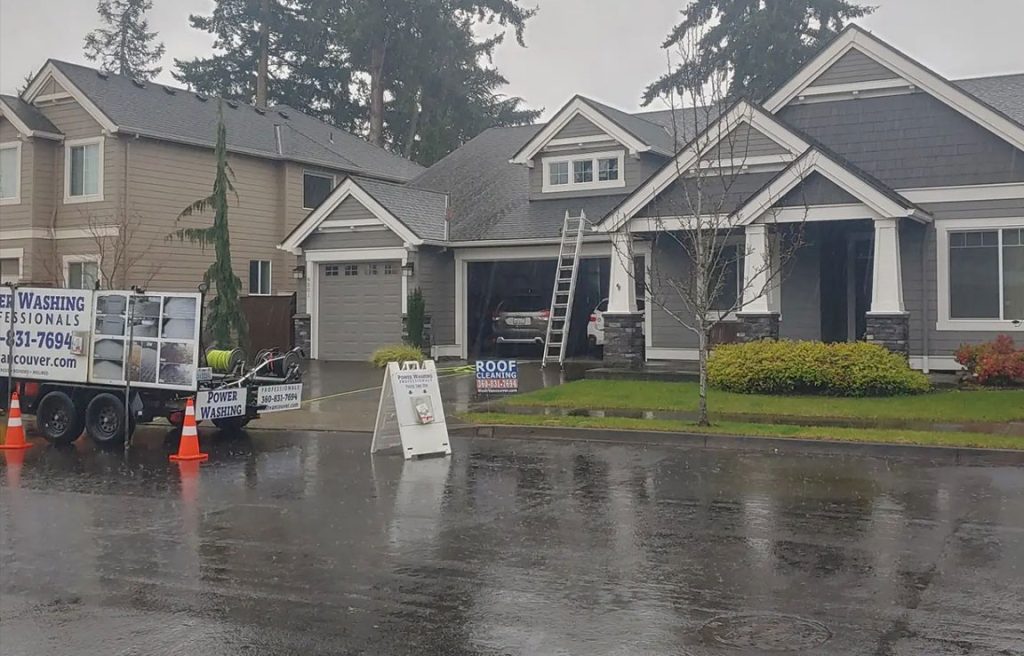
Many pressure washers and people in the pressure washing industry think that cleaning vinyl is as simple as using a pressure washer and high pressure alone. This is not the case. When applying high pressure to the exterior of vinyl siding, it is extremely probable that the homeowner or technician, if not using soaps and detergents, will damage the siding. From the manufacturer, vinyl siding has a smooth clear finish that protects the plastic from UV rays. When too much pressure is applied to the exterior of the surface, that exterior coating or that outside layer that protects the plastic is easily removed and damaged. After the exterior sheen and coating are removed, there is a chalky residual look and feel to the texture of the exterior piece of the vinyl siding. The proper way to clean vinyl siding is by using biodegradable soaps and solutions. By using soaps and solutions prior to applying water to rinse the vinyl siding, the organics are easily broken down and deteriorate before rinsing. This is why it is so imperative to use soaps and detergents and soft wash prior to using pressure washers to clean the exterior of a vinyl-sided home. There are many ways to apply soaps and detergents to the exterior of the home. The best method is by either using a gas, roof pump, air diaphragm pump, or using a 12-volt low-pressure application method. With less than 120 psi, there is very low damage for hurting the exterior of the vinyl siding through high pressure. As the substance and detergents are applied, the technician will then let the soaps and detergents dwell to break down the organics. The cleaning solutions used by industrial pressure washing companies, such as us at Power Washing Professionals, allow moss, mold, mildew, and algae to be broken down from the surface of the exterior. After the organics are broken down with the solution then, the exterior is rinsed with high volume and low pressure. This is accomplished by using large orifice tips and tips that are specifically sized for rinsing. When applying the detergents, the technician always starts from the bottom and works their way up so that the soaps can be applied to the bottom of the vinyl siding. Eaves and exterior gutters are also extremely hard to clean without substance detergents. From our experience out in the field for the last 5 years, we have noticed that in order to clean the exterior of eaves and exterior metal gutter faces, a high-concentration chemical solution is needed to clean those surfaces effectively. Vinyl siding can be cleaned with a much lower concentration rate of sodium, hypochlorite, and surfactants. For example- a roof cleaning mix that is needed to treat moss on an asphalt shingle roof should be treated with at least four and a half to 5% mix, yet the exterior of a vinyl home can be washed with 1.5 to 2% usually. When the technician rinses the home after the soaps and detergents have done their work, the water is then applied from the top and rinsed down the structure. In many cases, a soft bristle brush is needed to brighten up the exterior of the gutters and some hard-to-remove areas. We like to carry a soft brush with a telescoping wand and fill up a bucket with our soap solution to spot-treat areas so that we can control the application of our solutions. House washing and cleaning a vinyl home should be done at least every 1.5 to 2 years, depending on the geographic location of the home or property. Soft washing of the exterior of a vinyl home can reveal extremely dramatic results. We love cleaning the exterior of vinyl homes as when we are done, many times customers think that we have painted their home because it looks so transformationally different.
The Art of Window Cleaning – Tips From the Pros
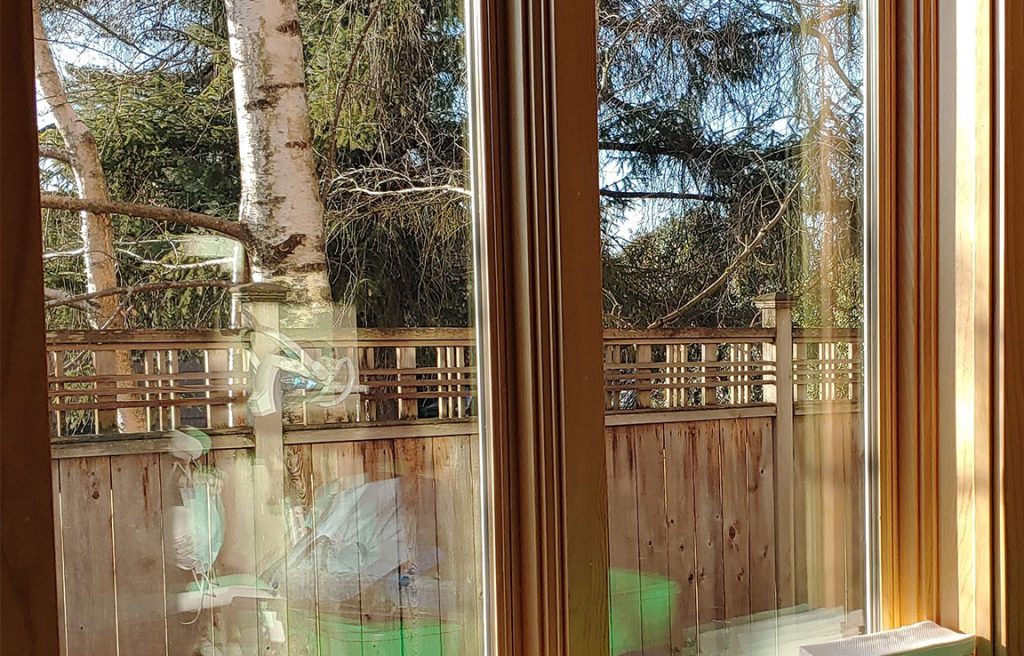
Window cleaning, whether it be commercial or residential, is an art. Is very easy to clean a piece of glass with a paper towel and Windex but to get a professional high-grade quality clean, it takes a different level of knowledge. The knowledge required to clean glass correctly is as follows: There are many factors to consider when cleaning glass, the first of which is the temperature of the glass. If you’re cleaning glass that has a temperature higher than the ambient temperature of the environment or over 80°, then your cleaning solution will spot and drive very quickly. There are many ways to combat this, but the best thing to do is to try to clean glass, not directly in the heat of the sun. If you do need to clean glass directly in the sun, there are some best ways to mitigate the temperature, such as cooling the glass down with water prior to cleaning the glass with a solution. Before cleaning the glass, it is best to have all of your supplies lined out and ready to go. Hand tools are always the best way to clean glass. A squeegee, a microfiber hand tool with a surgical towel, and some Dawn dish soap, these are always your best tools. In the window washing community, there are many new tools always coming up ready for use out in the field. The most effective tools have been around for a long time and are listed above. If you are cleaning screens, there are some really nice tools that you can purchase to make screen cleaning much easier, but if you’re just getting started, you can take the screens out by hand and clean them with the hose and a soft brush or a large soft sponge. Cleaning the tracks can be done in quite a few different ways. The easiest way to clean the tracks is to saturate it with water and absorb it with terry cloths. After you have removed the screen, cleaned the screen, and cleaned the tracks, you can now clean the glass itself. To clean the glass, take your Dawn dish soap and your window cleaning bucket and get the window cleaning tools wet. Once the squeegee is wet, you can apply the soap solution and saturate the whole window. After the whole window is covered in your glass cleaning solution, you will clean the upper and side portions of the frame with your surgical towel. After you have started to create a small dry passage for your squeegee, you can squeegee from top to bottom or in your S-style technique. Regardless of how you squeeze, just make sure that you overlap and try to dry the squeegee in between each pass of the window. After you use your squeegee to dry the window, use your surgical towel to touch up any areas that need cleaning and detail work. It is very easy to do this process and miss something. In order not to miss something. Make sure that you lean back and look at the glass from many different angles to look for detailed work. Once you’re confident that the piece of glass is fully clean without any streaks, you can now put the dry window screen back on the frame. The process for cleaning the interior of the window is exactly the same as cleaning the outside. The only difference is you will not have a screen to remove. Hard water stains require a different cleaning procedure. Hard water can come about for a myriad of reasons. Typically this is because of the source water in the area, whether it be from a municipal water source or from rain on the window. In some extreme cases, buffing wheels are needed to remove all of the hard water stains from the surface of the glass. Another way to effectively clean window surfaces is with a water-fed pole. Water Fed poles use a specialized filter that reduces all hard water and minerals from the water source. Once the water source is filtered, then it is moved through a small 1/8-inch line and pushed through a brush head. The brush head is used to agitate the glass and clean the glass. This does get Windows clean and leaves many customers happy, yet in many cases, a hand clean is much more superior and is what the customer requests specifically. This is how we like to clean windows at power washing professionals.
Essential Guide to Pressure Washing Your Driveway
Step-by-step guide to pressure washing your driveway When pressure washing the driveway of your residential home, it is imperative to follow certain crucial steps for safety so as to produce the intended desired result. Before you hook up the pressure washer, you may want to move large debris with a push broom or a leaf blower to give better access to the surface that needs to be cleaned with your pressure washer. To begin the initial steps of cleaning, you must line up the equipment and have the proper knowledge. The first piece of equipment that you will need is access to water and a garden hose. The garden hose will be feeding your pressure washer. If you are using a pressure washer from a store like Home Depot or Lowe’s, you likely will not need a larger tank to pull water from, such as a buffer tank. Hooking the spigot directly up to your pressure washer, you will then turn the water access on. After turning on the spigot to the pressure washer, make sure that you have your pressure line hooked up to the pressure washer unit. Connect the Lance and wand with the correct size tip on the end of your pressure washing line. Special caution- If you do not use the intended and correct size tips for your pressure washer that you purchased or rented, then you can damage the unloader valve. The unloader valve can be damaged because the orifice on the end of the pressure line is not the correct size it can confuse the springs and will cause it to open and shut incorrectly and not monitor the flow of pressure coming through the pump. Now that you have everything cleared off and you have your pressure washer ready, you need to start thinking about safety before you turn it on. Eye protection is an absolute must. Many people damage their eyes using high-powered water equipment tools such as pressure washers each year. This is easily mitigated by covering your eyes with simple eye protection. The next piece of safety equipment that is an absolute must is ear protection. Regardless of what type of pressure washer you are using, the decibels most likely will exceed what you should be hearing through your ears for a long duration of time. Gloves are also a really good idea here at Power washing professionals in Vancouver, Washington. Our local small business enjoys using small, light, thin gardening gloves to protect our employees’ hands from abrasion and the simple duties of work activity along with chemical stains. After setting all of your safety equipment up properly and having all of your equipment ready, You are ready to start the pressure washer and begin cleaning. To start the pressure washer, make sure that you pull on the trigger to allow flow so that the pump can spin freely to start the motor. Once you pull on the motor, start the cable and have the trigger open with the choke open as well, then close slowly after the machine begins running to allow it to get off choke mode. Now that the machine is running, you are ready to begin cleaning. When using a small or large rotary style, surface cleaners always start on the outside perimeter and create a box pattern with your approach to the cleaning surface. After boxing in the entire surface, now create an even line up and down the driveway with your surface cleaner. If you’re not getting the desired result, make sure you slow down so that the bars on the surface cleaner have time to do their work. After using the surface cleaner, take off the surface cleaner attachment and switch to a 25° or 15° fan tip. Use your fan tip and pressure line to get in the cracks and rinse the surface clean. Make sure you rinse all surrounding housing, cars, and all structures to reveal the natural beauty of your new driveway now!
Step-By-Step Guide to Pressure Washing Your Driveway
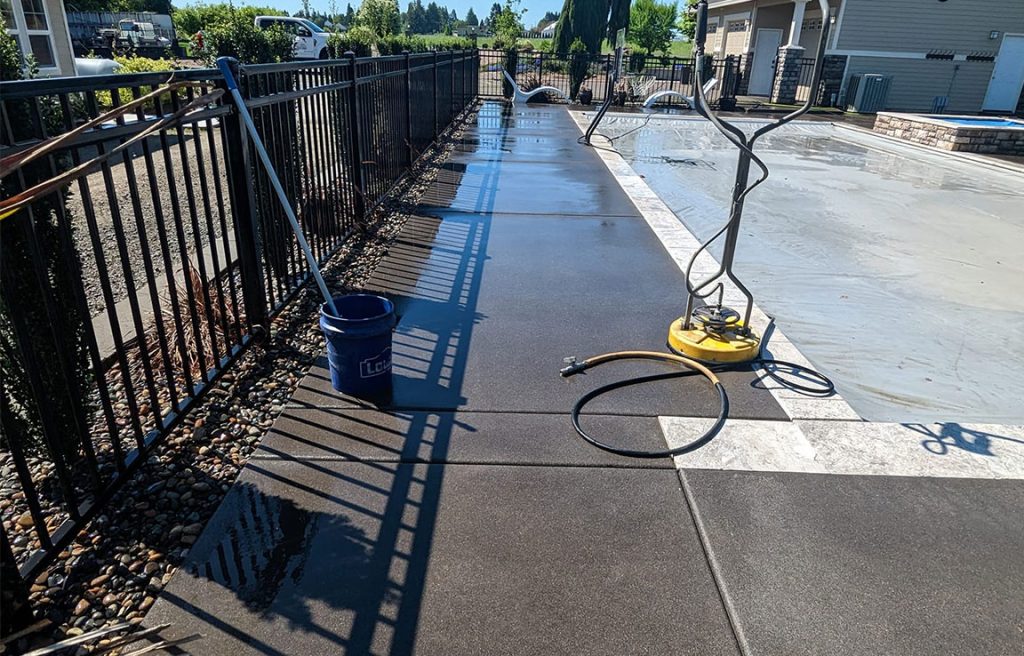
Remember to consult your pressure washer’s manual for specific instructions and safety guidelines. Additionally, be cautious when pressure washing near delicate surfaces or close to plants, as the force can cause damage.
The Environmental Impacts of Pressure Washing: What You Need to Know
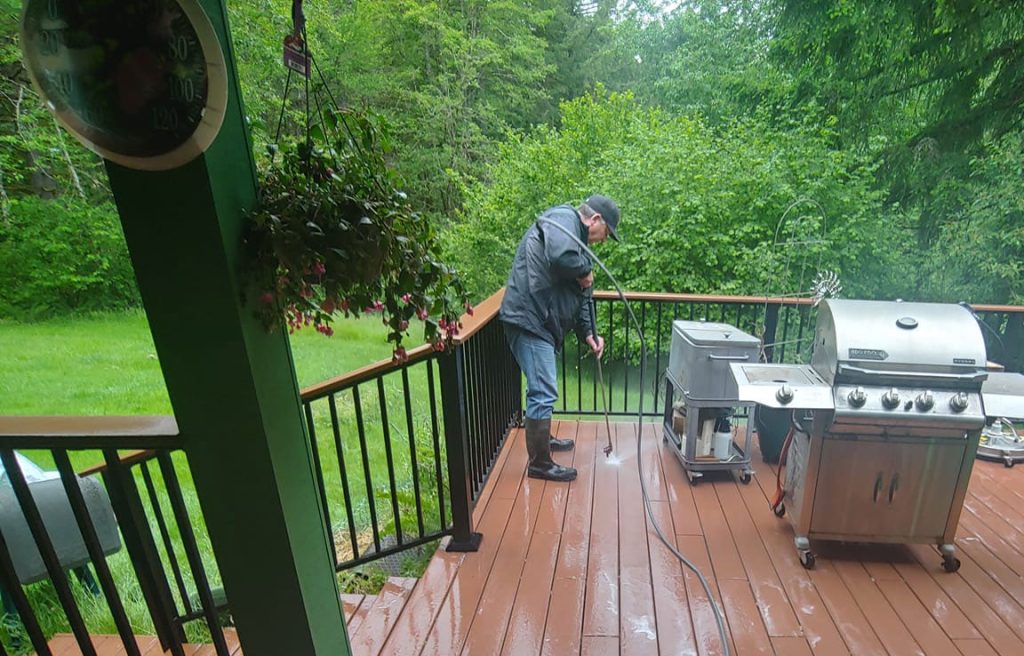
Introduction:Pressure washing has become a popular method for cleaning various surfaces, from driveways and decks to buildings and vehicles. While it can effectively remove dirt and grime, it’s essential to consider the environmental impacts associated with pressure washing. This blog post aims to explore the environmental consequences of pressure washing and provide valuable insights on how to minimize its negative effects. By understanding the environmental implications, we can make informed choices and adopt more sustainable practices. Section 1:The Water Consumption Challenge Pressure washing requires a significant amount of water to effectively clean surfaces. This section examines the water consumption associated with pressure washing, highlighting the strain it puts on water resources and the potential for water wastage. It also discusses alternative methods and strategies for reducing water usage during pressure washing. Section 2:Chemical Runoff and Water Pollution Another environmental concern associated with pressure washing is the discharge of chemicals and detergents into water bodies. This section delves into the potential pollutants present in cleaning agents and their impact on aquatic ecosystems. It also explores eco-friendly alternatives and best practices for minimizing chemical runoff and water pollution. Section 3:Soil Erosion and Landscape Damage The forceful nature of pressure washing can lead to unintended consequences such as soil erosion and damage to landscapes. This section explains the risks of soil erosion caused by pressure washing and its implications for vegetation, gardens, and nearby ecosystems. It offers suggestions for preventing soil erosion and minimizing landscape damage while achieving effective cleaning results. Section 4:Air Quality Concerns Pressure washers often emit noise and air pollution, which can have negative impacts on both human health and the environment. In this section, we explore the noise and air pollution issues associated with pressure washing, highlighting the importance of using equipment that meets environmental standards. We also discuss ways to mitigate air pollution risks during pressure washing activities. Section 5:Waste Management and Disposal The proper management and disposal of waste generated during pressure washing are crucial to prevent environmental harm. This section examines the various types of waste produced, such as wastewater, debris, and used cleaning materials. It provides guidance on appropriate disposal methods and recycling options to minimize the impact on landfills and natural ecosystems. Section 6:Sustainable Pressure Washing Practices To mitigate the environmental impacts of pressure washing, this section offers a range of sustainable practices and alternative cleaning methods. It discusses the use of eco-friendly cleaning agents, water-saving techniques, and equipment with improved efficiency. Additionally, it encourages the adoption of responsible cleaning practices and the promotion of eco-conscious approaches within the pressure washing industry. Conclusion:Pressure washing can have significant environmental impacts, including water wastage, chemical runoff, soil erosion, air pollution, and waste disposal challenges. By understanding these consequences and implementing sustainable practices, we can minimize the negative effects of pressure washing on our environment. As responsible individuals and businesses, it is our collective responsibility to prioritize eco-friendly alternatives and make informed choices that support the long-term health and sustainability of our planet.
How to Choose the Right Pressure Washing Company in Washington State?
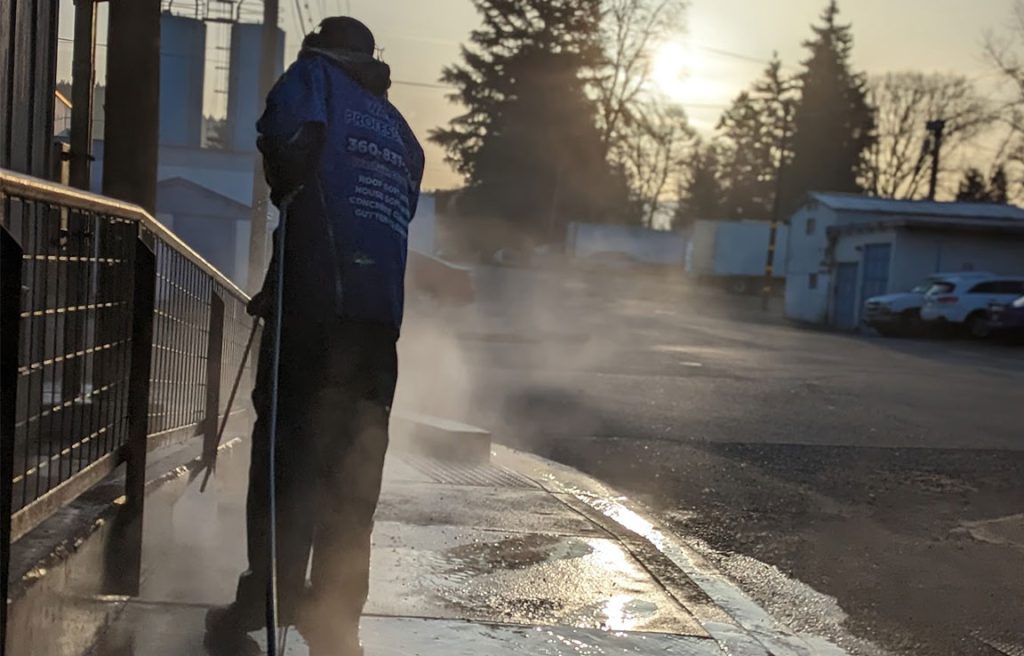
When cleaning your home or business establishment, it is important to consider which establishment will be best suited for your needs. Many customers that are seeking to have their business or home cleaned through a pressure washing company typically want a job done and done right. Some customers understand the value of hiring a professional service company and value the extra distance that these elite companies are willing to provide. Many homeowners decide to do pressure washing jobs themselves. Using small pressure washers from a box store such as Home Depot or Lowe’s will only get a consumer so far. The most aggressive and efficient pressure washer you can possibly buy from a store like Home Depot would be a 3 gallon per minute machine at 3500 PSI. This equipment might sound viable as an option, but when comparing a pressure washing equipment piece like this to what a professional company that you could hire would provide, there is absolutely a remarkable difference. Most professional pressure washing companies use a minimum of 8 to 10 gallons per minute at 4000 psi. Alongside having much more efficient and higher-powered units to perform the cleaning, there is also the contributing factor of understanding how to use the equipment and hiring a company that has processes associated with this equipment. One of the benefits of hiring a professional that has professional equipment and processes you will have your business or home cleaned correctly the first time. Many of the services that an exterior cleaning company provides, especially in Washington state, are services that require specialty equipment. For example, soft washing and moss treatment is something that the average consumer is not capable of performing themselves. To perform a soft wash on an asphalt shingle roof, there is deep cycle marine batteries that are required to power a 12 volt pump. The 12-volt pump then has a blend manifold that pulls three parts. One part is a surfactant that allows the sodium hypochloride to cling to the roof or surface the air cleaning. The cleaning agent in the 12 volt being applied to the roof is a 12.5% sodium hypochloride. Consumers are not capable of purchasing 12.5% sodium hypochloride from standard distributors. Not having access to industry specific chemicals or equipment is a barrier of entry that homeowners typically do not have access to. When choosing the right pressure washing company in Washington state for your needs, it is important to consider a few other factors. Having adequate and comprehensive insurance that is at least 1 million of an umbrella policy is imperative. Many fly by night companies or small mom and pops do not have insurance or licensing and bonding. When working at heights, on roofs, and using dangerous chemicals and high-powered equipment it is imperative that there is a worker’s compensation policy for employees while on the job site at customers, homes or businesses. This is important because if there is any accidents or mishaps then the insurance company covers the accident rather than leaving the homeowner at fault. Aside from having adequate insurance and workers’ compensation coverage, it is also important to check the background of the company. Checking the background of the pressure washing company you hire in washing the state can be done a handful of ways, but the best way is to check Google for Google reviews. Reviews shared on social media such as Facebook, Instagram, tick, tock, LinkedIn or Google reviews show prospective clients or customers. Previous work that you have done and give social validation. This is very important as it is modern-day word of mouth. Wordspreads fast whether you provide a good service or a bad service and it is important to get a fuel for the company you’re hiring before you invite them to your property. Just because a company doesn’t have a thousand reviews doesn’t mean that they’re a bad company. The quality of review and the responsiveness of the company also should play a factor of how you consider who to hire. Oftentimes there can be a discrepancy or a negative review and reading the reviews and seeing how the business responds to the negative review gives you a really good idea of how the company will handle mishaps. This is a great insight and allows a consumer to make a better-educated decision before doing business with a pressure washing company here in the Pacific Northwest.
The Science Behind Pressure Washing- How It Works
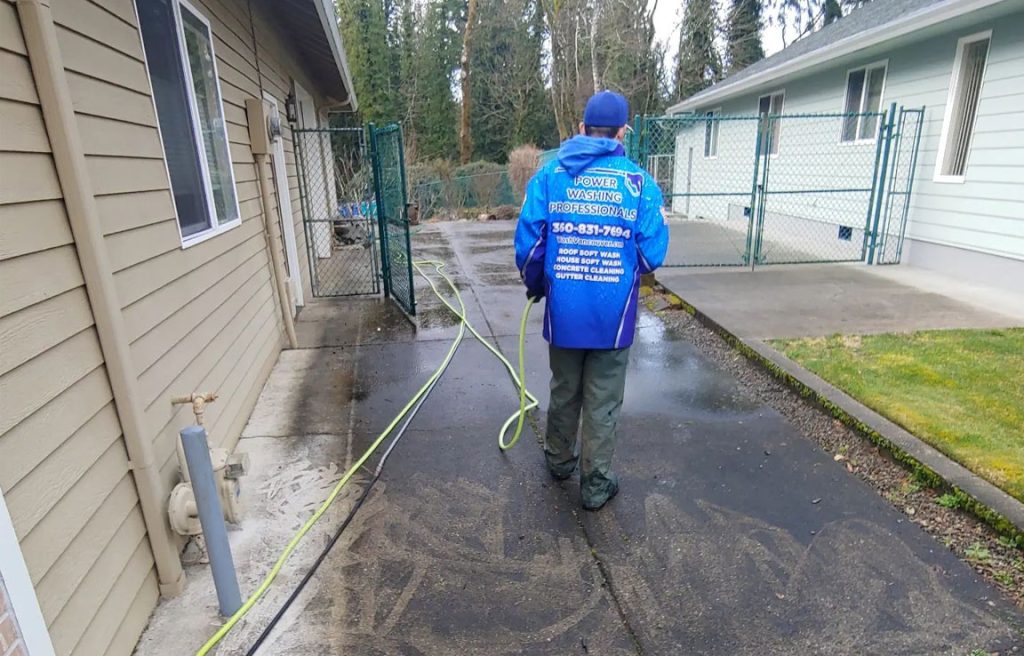
Pressure washing is an industry that is only around because of internal combustion engines. Through the use of internal combustion, engine and high pressured water pressure washing, technicians are able to clean different surfaces through different methods. Whether at a residential or a commercial job site, a pressure washing company uses large industrial-sized pressure washers to accomplish the task of cleaning either a commercial or a residential property through the use of high-powered equipment. This high-powered high volume high psi equipment is used alongside chemicals in some cases to achieve the end result. When pressure washing a flat concrete surface such as a driveway, a pressure washing operator uses a large rotary sound surface cleaner. A surface cleaner is simply a high-powered pressure line that is split into three different heads. These three different pressure heads then spin underneath a rotary skirt that has a brush and keeps all the debris underneath the circular device. By and large, the surface cleaners have casters attached to them. Having casters attached to a surface cleaner simply allows the operator to perform the cleaning with less muscular strain on the back and joints. Using a surface cleaner allows the pressure washer to clean the driveway and leave a better result. This better result is achieved because instead of using a small 25° tip and trying to go back and forth and back and forth, the technician is able to cover a large surface area more evenly and uniformly. Using this high pressure through the surface cleaner, moss, mold, mildew, algae’s can be removed manually. Not in all cases does the surface cleaner do the trick. As with most tools and a carpenter’s belt- sometimes a pressure washer needs to pull out a more aggressive tool. In that case, many pressure washers will carry a turbo nozzle. A turbo nozzle is simply a 0° tip that spins extremely fast in a rotary-style motion. It is extremely aggressive and damages just about everything it touches, so you have to be extremely careful when operating it. The turbo nozzle can be used after the surface cleaner in order to touch up any areas of lichen. The technician must also be careful while using the turbo nozzle not to approach the concrete too fast while applying pressure. The reason this is done carefully is you want a uniformed look to the concrete. After cleaning the driveway and rinsing multiple times, it is common for a pressure washer company to carry concrete cleaning solutions on the vehicle. After the service is performed and the driveway is completely cleaned and rinsed and in some cases, when the technicians deems appropriate, there will be a light concrete cleaning solution applied as a post solution.
Ladder Safety
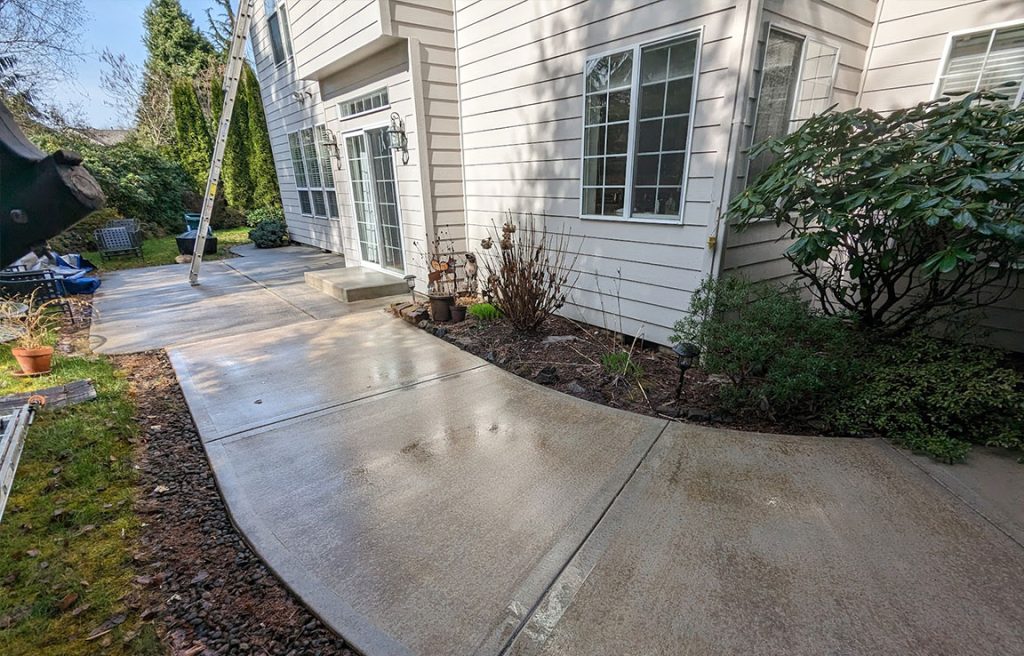
Ladders are a common tool used in many industries, from construction and maintenance to retail and hospitality. While ladders are essential for tasks that require reaching high places, they can also be incredibly dangerous if not used properly. According to the Occupational Safety and Health Administration (OSHA), falls from ladders account for over 20% of all workplace fatalities. In this blog post, we will discuss some important tips and guidelines for ladder safety that can help prevent accidents and injuries. Improper use of ladders is one of the leading causes of accidents and injuries in the U.S. For its seventh year, the American Ladder Institute (ALI) is sponsoring National Ladder Safety Month to raise awareness of ladder safety. They hope to decrease the number of ladder-related injuries and fatalities both at home and in the workplace by focusing on learning how to use this equipment safely. Use the right type of ladder for the job and maintain good climbing habits to avoid falling. Just about every business and home has a ladder. They are a quick and easy way to get up high. Many people use them to access the roof of their building or throughout the construction process and when working with utilities, but this equipment can easily lead to injury and even death when not used properly. According to the CDC, each year, around one hundred people die, and thousands more are injured from ladder-related falls. They regularly make the yearly top 10 workplace safety citations on OSHA’s list of the most hazardous work-related risks. But these deaths and accidents can easily be prevented by making sure you are using your ladder correctly. Choose Search by product name, product # Search by product name, product # Free US shipping on orders $199 or more. Learn more Home / Blog / National Ladder Safety Month National Ladder Safety Month Posted by PK Safety Team on Fri Mar 03rd, 2023 Search our Blog Improper use of ladders is one of the leading causes of accidents and injuries in the U.S. For its seventh year, the American Ladder Institute (ALI) is sponsoring National Ladder Safety Month to raise awareness of ladder safety. They hope to decrease the number of ladder-related injuries and fatalities both at home and in the workplace by focusing on learning how to use this equipment safely. Use the right type of ladder for the job and maintain good climbing habits to avoid falling. Just about every business and home has a ladder. They are a quick and easy way to get up high. Many people use them to access the roof of their building or throughout the construction process and when working with utilities, but this equipment can easily lead to injury and even death when not used properly. According to the CDC, each year, around one hundred people die, and thousands more are injured from ladder-related falls. They regularly make the yearly top 10 workplace safety citations on OSHA’s list of the most hazardous work-related risks. But these deaths and accidents can easily be prevented by making sure you are using your ladder correctly. Keep these tips in mind when scaling heights on a ladder: Choosing a Ladder Staying safe means using the right type of ladder for the job. Ladders can vary in height — anywhere from several feet to over 40 feet high. Ladders that are too short or too tall can be hazardous. Measure the maximum height of the surface area you need to reach, such as the roof or gutters of the building. You can use either a leaning extension ladder or a self-supporting step ladder. There are ladders that can be used in confined space descent and rescue like the DBI Rollgliss Synthetic Rescue Ladder or the French Creek Flexible Access Ladder. These need to be long enough to reach the When choosing an extension ladder, find a ladder that is seven to twelve feet higher than the height of the gutters or support point. Use a 16-foot ladder when trying to reach a 9-foot height. Use a 40-foot ladder to reach 28 to 31 feet off the ground. When using a step ladder, you generally need one that’s four feet shorter than the maximum height you’re trying to reach. For example, if you need to reach a level seven feet off the ground, use a ladder that’s three feet high. If you need to reach a 20-foot height, use a 16-foot ladder. The top cap should not be used as a step. Ladders can also be made of different materials, including fiberglass, wood, aluminum, steel, or polyester webbing. Fiberglass ladders tend to be the most expensive and the most reliable. They are electrically non-conductive, which means they are safe to use around electrical wires. Do not use a metal ladder when working near electrical equipment or wires to prevent electrocution. Wood ladders are also non-conductive when they are clean and dry, but they can break apart over time. The wood can chip and spread debris, making the ladder less structurally sound. Metal ladders should only be used in areas free of electrical equipment. They are lightweight, durable, and come with corrosion resistance. Confined space rescue and descent ladders that are made of webbing should be examined before each use to ensure there is no damage to the webbing or stitching. Examine the work site to make sure you are using the right ladder for the job. When using a ladder for a specific task, inspect it for damage. If any part of the ladder appears weak or loose, remove it from circulation and buy a new ladder right away. Climbing the Ladder Put the ladder in position and check to ensure it feels stable and secure before climbing. You should be wearing shoes with a firm grip and safety gloves if necessary. Inspect the steps and handles on the ladder to see if they are dry. Avoid climbing the ladder when wet to reduce your chances of slipping. The
How Pressure Washing Protects Your Home’s Longevity And Value
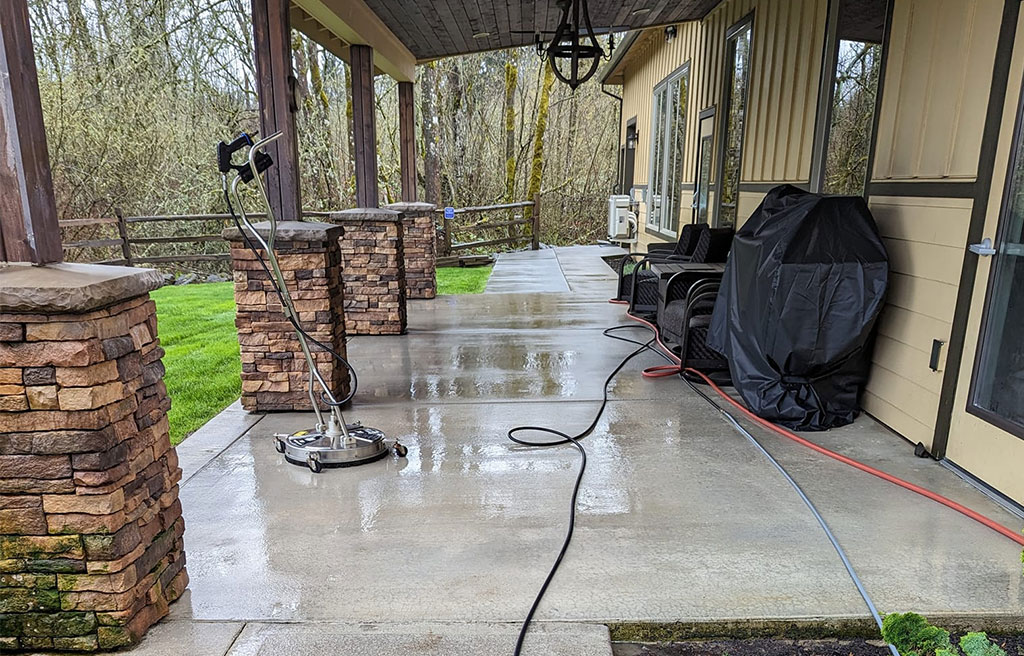
Owning a home and keeping it maintained can be a tedious task. This tedious task can be exacerbated in the Pacific Northwest because of the excessive amounts of moisture and precipitation through rainfall and cloud coverage that Vancouver and the surrounding area receive. Whether it is a roof surface such as an asphalt shingle roof or the exterior of the home and concrete- leaving organic such as moss can damage the surface in time. Pressure washing is a cleaning technique that involves using high-pressure water to remove dirt, grime, and other contaminants from surfaces. Pressure washing can be used on a variety of surfaces, including siding, decks, driveways, and sidewalks. In this article, we will discuss how pressure washing can protect your home’s longevity and value. Over time, dirt, grime, and other contaminants can build up on the exterior of your home. These contaminants can cause damage to the surface of your home, leading to premature wear and tear. For example, algae and mold can grow on the surface of your home, causing the paint to peel and the wood to rot. Pressure washing can remove these contaminants, protecting your home from damage and extending its life. Improves Curb Appeal A clean and well-maintained home can improve your home’s curb appeal. Curb appeal refers to the attractiveness of your home’s exterior and is an important factor in determining its value. A clean home can also create a positive first impression for potential buyers. Pressure washing can remove dirt, grime, and other contaminants from the surface of your Home. The national homeowners association states that pressure washing increases your overall curb appeal and, therefore your home value by 12 to 15% This is a remarkable statistic considering that most people that own a home have their largest investment tied up in this piece of real estate. Procuring, protecting, and preserving this investment should be and is typically paramount in the consumer’s mind. Turning to a professional pressure washing company to maintain, restore, protect, and keep clean is the best option for a homeowner. Many homeowners try to do the dirty work themselves by rolling up their sleeves and purchasing a pressure washer themselves. There are also many injuries that happen each year because of the lack of knowledge and the inability to use the equipment, and a lack of training on how to perform the procedures. When calling a professional power washing company, a homeowner can rest assured that their house will not be damaged with high pressure if there is a house wash being performed, for example. In many cases, professional pressure washing companies use industrial biodegradable soaps and detergents to lift organics. Using these industrial biodegradable sub-detergents allows the surface of the home or deck or whatever. The technician is cleaning to be lifted and cleaned much easier with less pressure. This usage of soft washing protects the homeowner and the investment of the consumer. The number one goal of a professional pressure washing company should be to perform the cleaning and scope of work as requested.
What is Roof Soft Washing
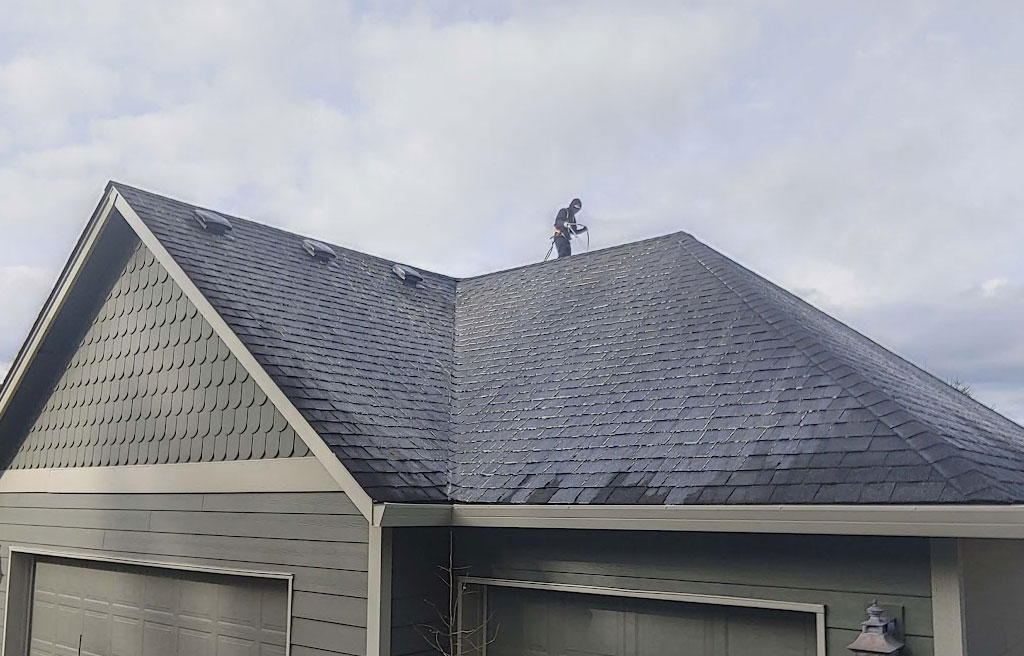
Roof soft washing is a process that involves using a low-pressure application of a specialized cleaning solution to remove dirt, grime, and other contaminants from roofs. The cleaning solution is designed to kill algae, mold, and other organisms that can damage a roof’s shingles, tiles, or other roofing materials. The process is safe and effective and can help to extend the life of a roof. Why Soft Washing? Traditional roof cleaning methods often involve the use of high-pressure washing equipment. However, high-pressure washing can damage roofs by dislodging shingles, breaking tiles, and causing leaks. High-pressure washing can also force water and cleaning solution under shingles, causing damage to the roof deck and potentially leading to rot and other issues. Soft washing is a much gentler method of cleaning a roof. The process involves using a low-pressure nozzle to apply the cleaning solution to the roof. The solution is left on the roof for a period of time to allow it to work its way into the surface of the roof and kill any algae, mold, or other organisms that may be present. After the cleaning solution has had time to work, it is rinsed away using a low-pressure rinse. The Benefits of Roof Soft Washing There are many benefits to having a roof soft washing performed on your home. Some of these benefits include: Improved Curb AppealOne of the most obvious benefits of roof soft washing is improved curb appeal. A dirty, stained roof can make a home look unkempt and unattractive. Soft washing can remove unsightly stains and restore a roof to its original color, making a home look more inviting and attractive. Extended Roof LifeAlgae, mold, and other organisms that grow on a roof can cause damage to roofing materials over time. By killing these organisms with a soft washing solution, a roof can last longer and require fewer repairs over its lifespan. Reduced Energy CostsRoofs that are covered in algae and other growth can absorb more heat from the sun, which can lead to higher energy costs as air conditioning systems have to work harder to keep a home cool. By removing these growths, soft washing can help to reduce energy costs and make a home more energy-efficient. Improved HealthAlgae, mold, and other organisms that grow on a roof can be harmful to human health, particularly for individuals who suffer from allergies or respiratory issues. Soft washing can remove these organisms, improving the air quality around the home and reducing the risk of health problems. The Soft Washing Process The soft washing process typically involves the following steps: InspectionBefore the soft washing process begins, the roof is inspected for any damage or other issues that need to be addressed. Any broken tiles or damaged shingles are repaired, and any other issues are addressed before the soft washing process begins. Cleaning Solution ApplicationThe cleaning solution is then applied to the roof using a low-pressure nozzle. The solution is allowed to sit on the roof for a period of time, typically around 20-30 minutes, to allow it to work its way into the surface of the roof and kill any algae, mold, or other organisms that may be present. RinseAfter the cleaning solution has had time to work, it is rinsed away using a low-pressure rinse. This rinse removes the cleaning solution and any dirt or grime that may have been loosened by the solution. InspectionAfter the soft washing process is complete, the roof is inspected again to ensure that all contaminants have been removed and that there are no issues that need to be addressed. The Importance of Hiring a Professional While roof soft washing may seem like a simple process, it is important to hire a professional to perform the work.